





BERGMANN EDITION
Doisy-Lampis, Grand Duo Concertant
Doisy-Lampis, Grand Duo Concertant
Couldn't load pickup availability
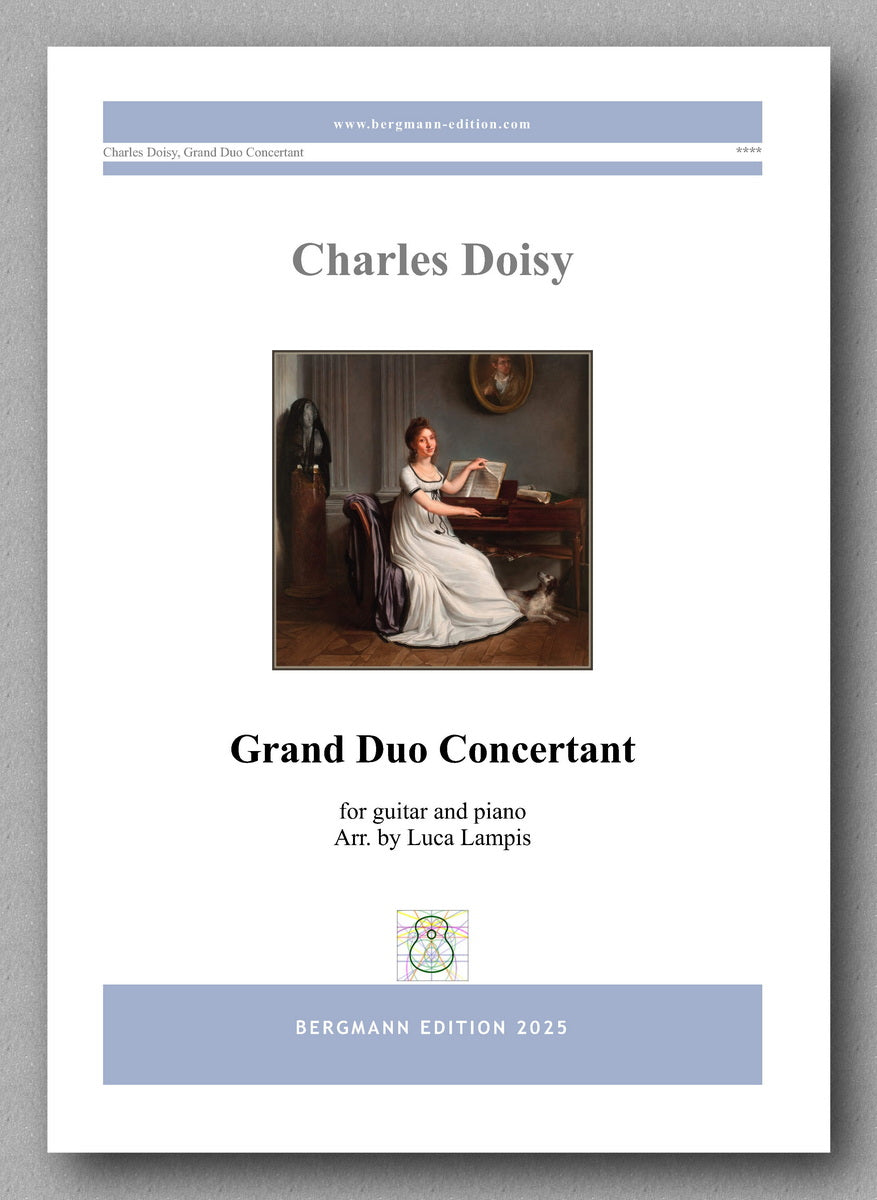
François Doisy (1748–1806), Grand Duo Concertant
For guitar and piano (edited and revised by Luca Lampis)
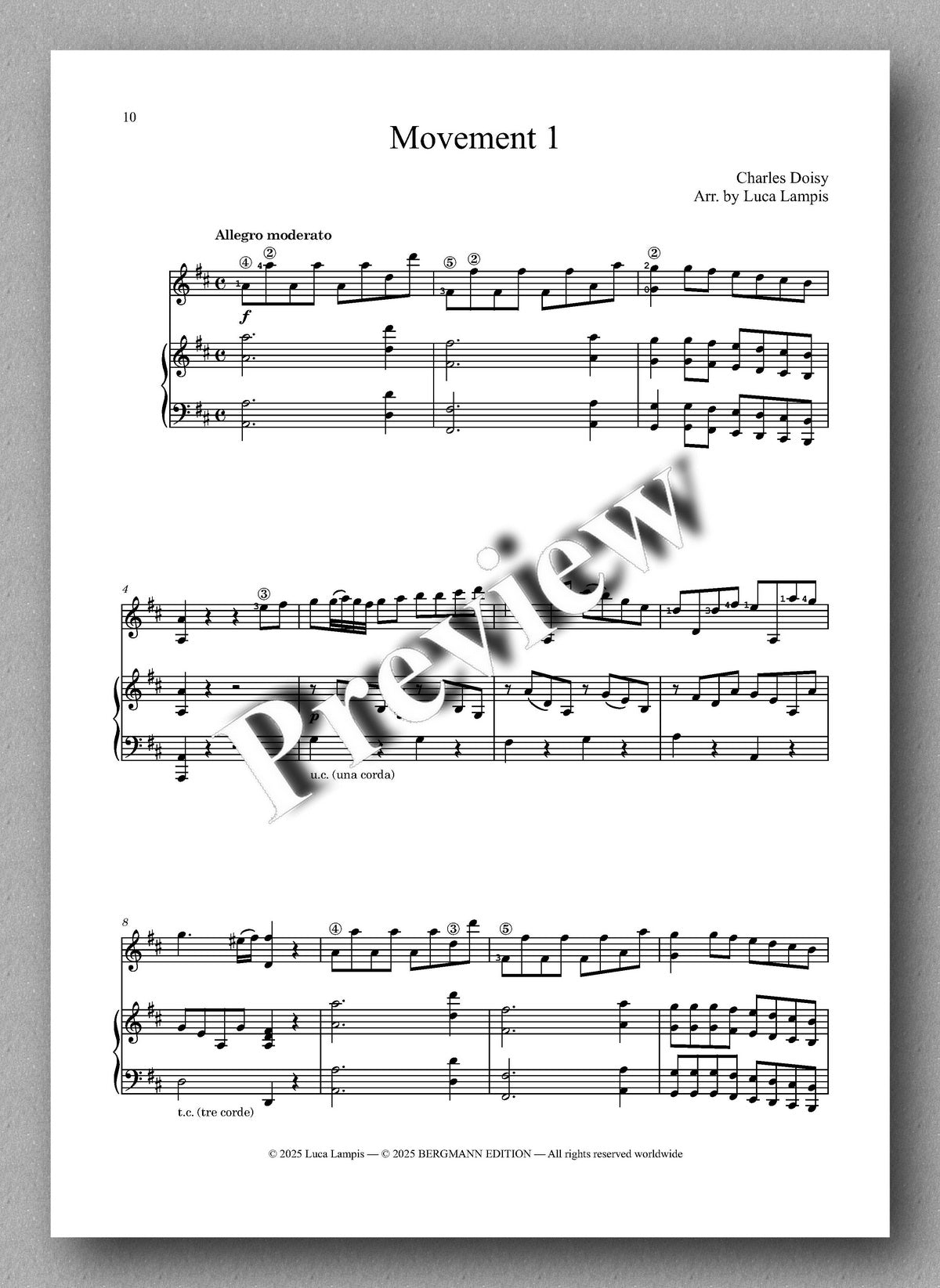
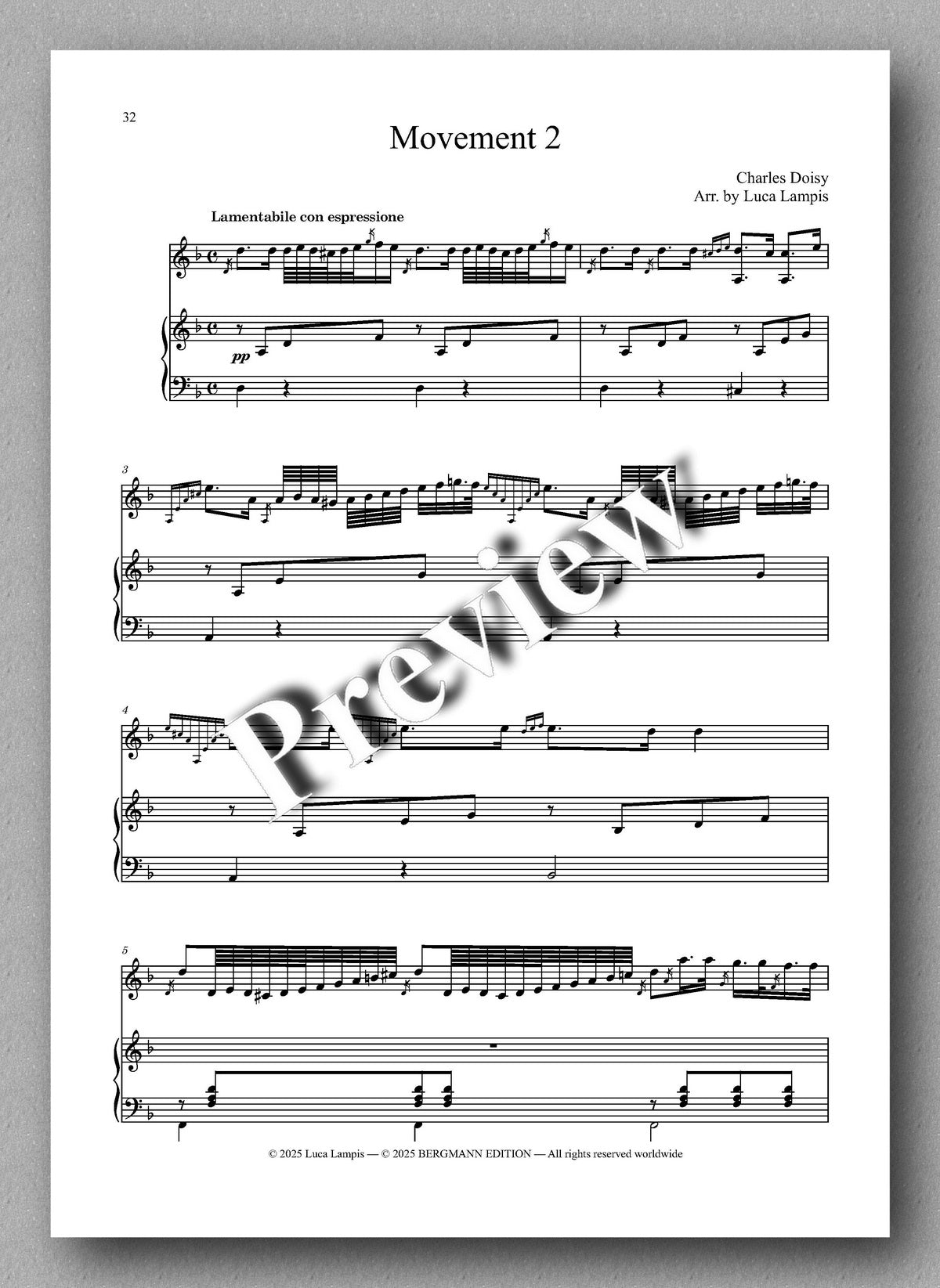
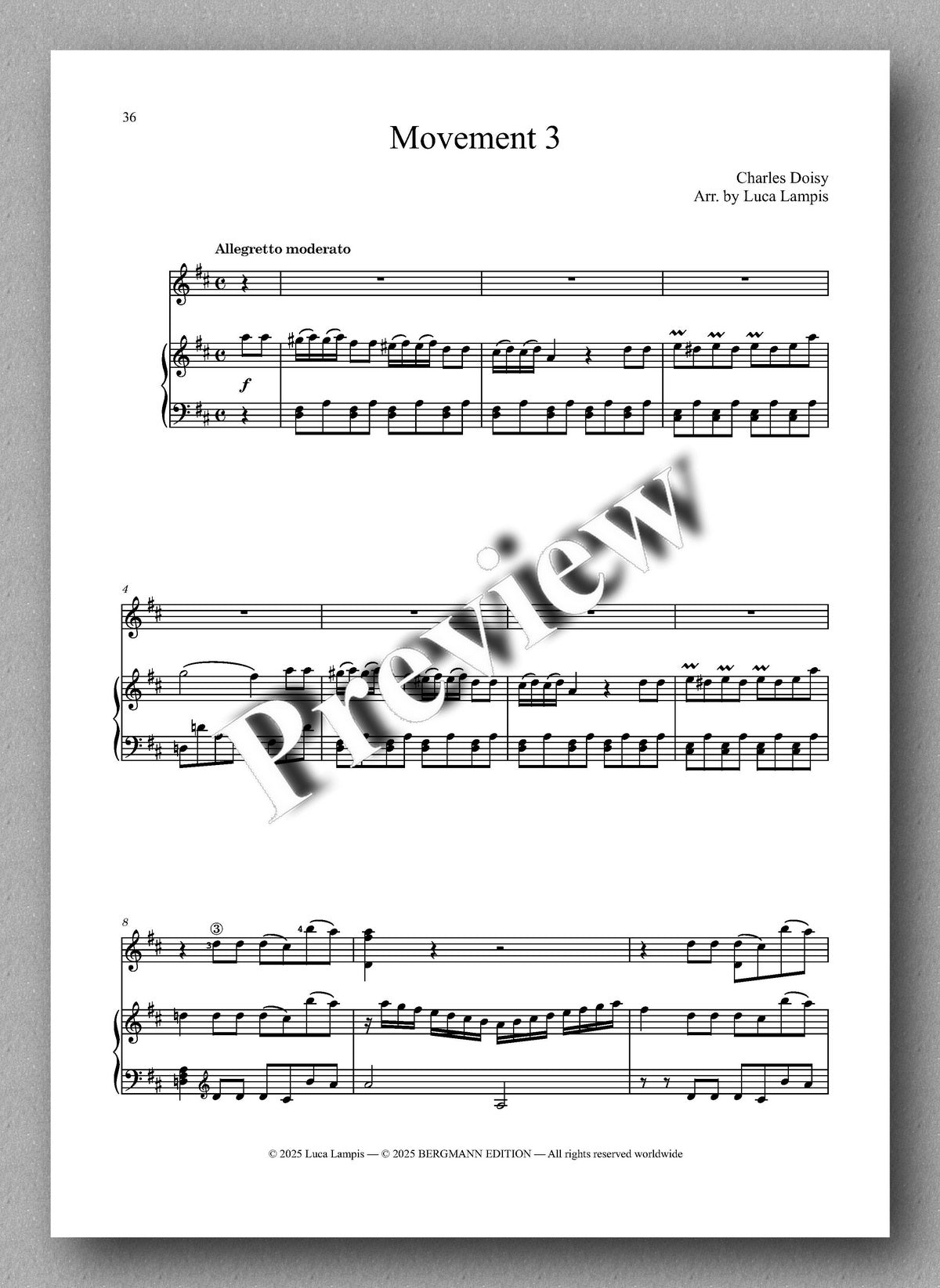
This edition includes a substantial preface, composer biography and bibliography by Luca Lampis and Pedro Garcia De La Osa.
Questa edizione comprende un’ampia prefazione, una biografia del compositore e una bibliografia a cura di Luca Lampis.
Grand Duo Concertant Composé pour Guitare et Piano
(Segue la traduzione italiana)
It is not yet possible to establish the exact date of composition, but since the guitar part does not use the sixth string, we can estimate that the piece was written between the late 18th and early 19th century in Paris, where the six-string guitar was already in use, although Doisy was among the last to adopt it.
On the first page is Doisy's dedication: ‘Dedié a son Altesse la Princesse héréditaire de Hohenzollern Hechingen, née Princesse de Courlande’. The piece is therefore dedicated to Luise Pauline Maria Biron (1782-1845), daughter of the last Duke of Courland and Semigallia Peter Von Biron (1724-1800) and his third wife, Anna Dorothea von Medem (1761-1821), who was a woman with a strong intellectual background and very active.
Luise Pauline was Princess of Courlande by birthright and became the Crown Princess of Hohenzollern Hechingen when she married Frederick Hermann Otto, Crown Prince of Hohenzollern Hechingen, in 1800. Although there is no detailed biography about her, she certainly stayed in Paris in 1801 to negotiate the maintenance of the family possessions in the Netherlands. As Luise Pauline belonged to one of the wealthiest families of the period, she undoubtedly received an above-average education. She was probably Doisy's pupil during his stay in Paris, given the musician's prestige.
Grand Duo Concertant Composé pour Guitare et Piano
Non è ancora possibile stabilire la data esatta di composizione; tuttavia, poiché la parte di chitarra non prevede l’impiego della sesta corda, si può ipotizzare che il brano sia stato scritto tra la fine del XVIII e l’inizio del XIX secolo a Parigi, dove la chitarra a sei corde era già in uso, sebbene Doisy sia stato tra gli ultimi ad adottarla.
Nella prima pagina compare la dedica di Doisy: «Dedié a son Altesse la Princesse héréditaire de Hohenzollern Hechingen, née Princesse de Courlande». Il brano è dunque dedicato a Luise Pauline Maria Biron (1782–1845), figlia dell’ultimo duca di Curlandia e Semigallia, Peter von Biron (1724–1800), e della sua terza moglie, Anna Dorothea von Medem (1761–1821), donna di solida formazione intellettuale e molto attiva.
Luise Pauline era principessa di Curlandia per diritto di nascita e divenne principessa ereditaria di Hohenzollern-Hechingen quando, nel 1800, sposò Federico Ermanno Ottone, principe ereditario di Hohenzollern-Hechingen. Sebbene non esista una biografia dettagliata che la riguardi, è certo che nel 1801 soggiornò a Parigi per negoziare il mantenimento dei possedimenti della famiglia nei Paesi Bassi. Appartenendo a una delle famiglie più ricche dell’epoca, Luise Pauline ricevette indubbiamente un’istruzione superiore alla media. È probabile che sia stata allieva di Doisy durante il soggiorno del musicista a Parigi, considerato il prestigio di cui questi godeva.
- Product: Digital PDF or Print-on-Demand
- Pages: 62 pages full score. 24 pages guitar part and 44 pages piano part.
- Level: Intermediate
-
ISMN 979-0-706842-92-9
-
Order Number: BE-250206
